
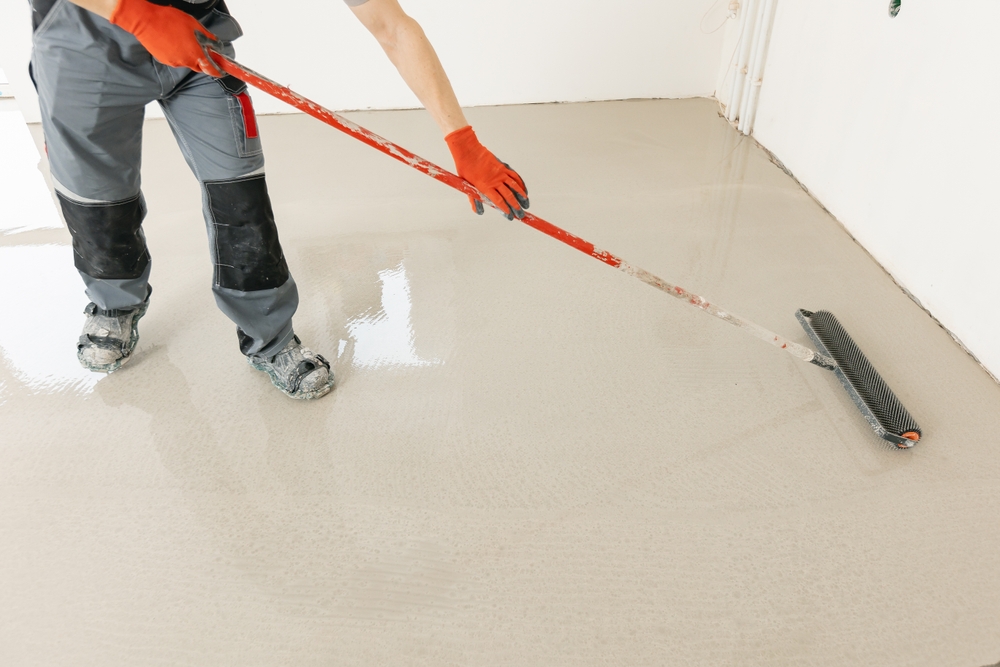
Choosing between polyurea and epoxy for a concrete floor coating depends on factors like installation speed, durability, and performance needs. Both supply strong protection for garage floors and industrial spaces, but they perform differently in real-world conditions.
Common Concrete Floor Coating Options
Concrete coatings protect, strengthen, and enhance the appearance of floors in garages, shops, and commercial spaces. Two of the most popular systems, polyurea and epoxy, deliver professional-grade results suited to different project goals and environments. Legacy Industrial also manufactures DeltaDye® concrete stain, a versatile option for adding long-lasting color and visual depth to interior or exterior concrete surfaces.
Polyurea Floor Coatings
Polyurea coatings are known for their fast-curing chemistry, allowing floors to return to use quickly. They offer excellent flexibility, UV stability, and resistance to chemicals and abrasion, making them ideal for garages, warehouses, and outdoor areas. Polyurea bonds tightly to prepared concrete, forming a tough, seamless surface that resists peeling and yellowing.
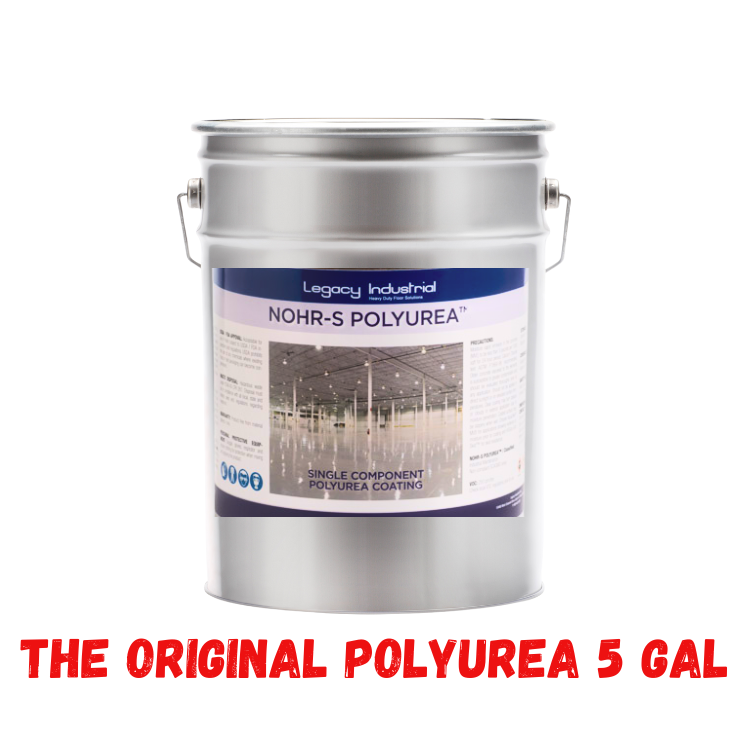
Our Nohr-S® Polyurea is a single-component aliphatic polyurea, unlike many competing two-part systems that require mixing Part A and Part B before application. It also features a longer pot life than epoxy, giving installers more working time while still offering a rapid cure once applied. Nohr-S® Polyurea can be applied without a primer, saving time and materials, and it’s an excellent topcoat for flake blends. It can also be mixed with anti-slip additives for improved traction. Its rapid installation and long service life make it a preferred choice for contractors seeking durable performance in high-traffic or variable-temperature spaces.
Explore tint options for the Nohr-S® Polyurea Coating (1 pack per gallon) to customize color and finish for your project.
Epoxy Floor Coatings
Epoxy coatings create a thick, glossy finish that enhances durability and appearance for residential and light industrial floors. They’re slower to cure but form a strong, protective layer that resists impact and chemical spills. Epoxy features exceptional adhesion and can be customized with color flakes, metallics, or anti-slip additives. However, epoxy is not UV-resistant and can turn yellowish or amber when exposed to sunlight, making it better suited for indoor or shaded areas.
While it’s less UV-resistant than polyurea, it remains a reliable, budget-friendly solution for enclosed spaces like garages, workshops, and commercial interiors where controlled conditions support longer curing times.
Polyurea vs. Epoxy Coating Comparison
Comparing polyurea vs. epoxy highlights how each system performs under different conditions, including installation speed, curing time, durability, and long-term performance. To see these differences in action, watch our Nohr-S® Polyurea vs Box Store Epoxy Garage Kits video, which demonstrates how professional-grade polyurea outperforms typical retail epoxy kits in real-world use.
Installation & Curing Time Considerations
Polyurea coatings cure within hours, making most projects ready and reopened in a single day. This speed reduces downtime and limits disruption in busy spaces. It can also be applied directly to prepared concrete without the need for a primer, saving time and simplifying installation.
Epoxy coatings take longer curing periods, sometimes several days, before the surface can handle vehicle traffic. The slower process can be helpful for beginners since it allows more working time during the application. Both options need proper surface preparation, but polyurea’s rapid return to service often makes it the faster, more convenient choice.
For a practical look at how it’s applied, see our Nohr-S® Polyurea Garage Floor Coating Application video for step-by-step guidance.
Durability & Longevity Expectations
Polyurea coatings are highly flexible and resistant to impact, which helps prevent cracking and delamination over time. They perform exceptionally well in areas exposed to frequent vehicle traffic or temperature changes.
Epoxy floors also deliver long-lasting protection and strong adhesion, though they can become brittle after years of heavy use or UV exposure. For most garage and light industrial projects, both systems provide dependable strength, but polyurea typically lasts longer when subjected to demanding mechanical or thermal stress.
Resistance to Environmental Factors
Polyurea coatings stand out for their resistance to moisture, chemicals, and extreme temperatures. Their dense, flexible structure forms a barrier against fuel, salt, and cleaning solvents, making them reliable for garages and marine settings.
Epoxy coatings perform well in dry, temperature-stable environments and show strong resistance to oil, coolant, and mild acids. However, extended moisture exposure can affect adhesion. For floors frequently exposed to water, heat, or chemical spills, polyurea offers better long-term protection and superior environmental performance.
Cost & Value Considerations
Epoxy coatings typically cost less per square foot, which appeals to homeowners and small contractors seeking a cost-effective solution. They deliver excellent value for projects where an extended curing time is manageable.
Polyurea coatings require a higher upfront investment but often pay off through reduced downtime, fewer repairs, and longer service life. The total project cost should factor in labor, performance longevity, and maintenance. For heavy-duty applications, polyurea’s durability typically delivers stronger overall value despite a higher initial price.
Safety & Surface Performance
Both coatings can be enhanced for safety and hygiene through additives. Polyurea can be used as a topcoat over decorative flake systems and can be blended with anti-skid materials or antimicrobial agents to improve traction and cleanliness in commercial or medical settings. Epoxy coatings also accept similar treatments, such as quartz or flake textures, to create slip-resistant finishes. The difference lies in surface flexibility; polyurea remains slightly elastic, maintaining texture longer under pressure. For areas requiring high traction or sterile conditions, either option can be customized to meet those needs effectively.
Surface Type You’re Looking to Coat
Polyurea performs best on structurally sound, well-prepared concrete in environments where moisture or temperature shifts are common. It adapts to both interior and exterior applications. Epoxy coatings are best suited for enclosed, climate-controlled spaces where consistent conditions promote strong adhesion. For older or uneven concrete, surface repair and priming are necessary for both systems. Matching the coating to the environment and floor condition ensures long-term adhesion, appearance, and resistance to daily wear.
Choosing the Right Coating for Your Project
Selecting between polyurea and epoxy depends on your project goals, environment, and long-term performance expectations. For complete garage floor systems, Legacy’s Nohr-S® Polyurea Aegis Kit and Full Flake Kit provide everything needed for professional-grade installation.
When Polyurea Is a Good Fit
Polyurea is ideal for garages, workshops, and commercial spaces that experience frequent use, temperature swings, or chemical exposure. It installs quickly, resists moisture, and maintains flexibility under stress. This coating works best for those who value durability, low maintenance, and fast turnaround, offering long-term protection for high-traffic floors that face heavy wear and demanding conditions year-round.
When Epoxy Is a Good Fit
Epoxy suits enclosed or climate-controlled spaces where a high-gloss, decorative finish is desired. It performs well in residential garages and light industrial areas exposed to minimal UV or moisture. Epoxy provides reliable protection and a polished appearance at a more budget-friendly cost, providing excellent results for projects where curing time is less of a concern and visual appeal matters most.
Let Legacy Industrial Support Your Next Project
Choosing the right concrete floor coating starts with having dependable products and expert guidance. Legacy Industrial offers professional-grade polyurea and epoxy systems engineered for long-term performance in garages, workshops, and commercial spaces. Our team can help you find the right coating kit for your specific environment and project goals. Explore our Nohr-S® Polyurea and epoxy coating kits today to start your project with confidence and proven results.