
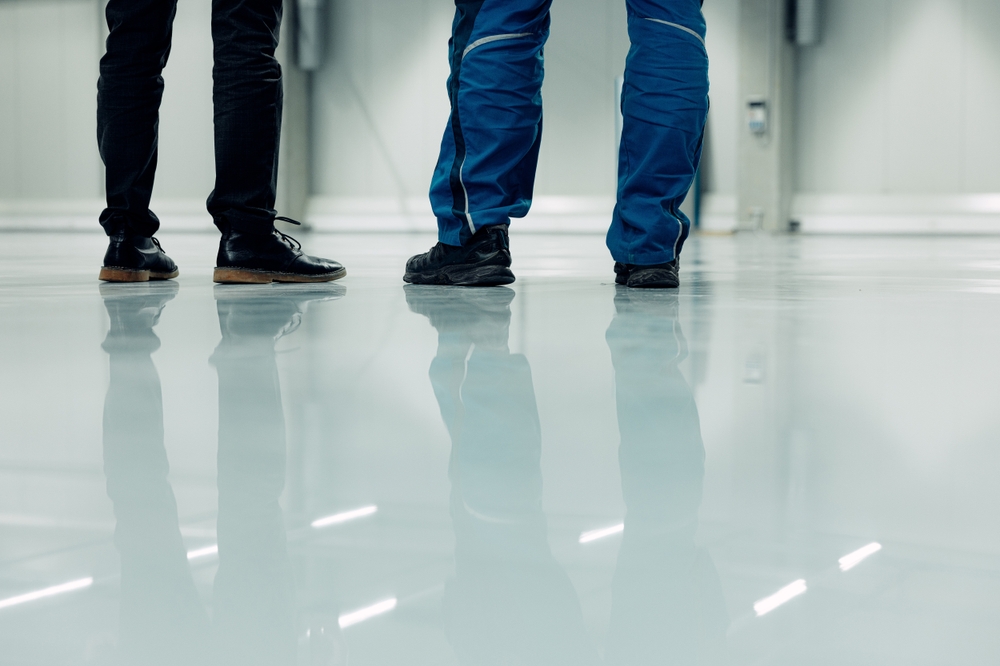
Concrete floors in plants, commercial kitchens, and service bays deal with frequent shifts in heat throughout the day. It’s tempting to assume a single coating can handle every temperature spike, but that’s rarely true. As temperatures climb, many floors begin to crack, soften, or discolor. High-temperature industrial concrete coatings are engineered to prevent those issues, pairing smart chemistry with real-world testing so your floors stay durable and safe under pressure.
Key Considerations for Temperature-Resistant Concrete Floor Coatings & Sealers
Temperature Range
Every coating lists a service temperature range, but real facilities often push those limits. Running close to the maximum rating for long periods accelerates wear, and short, sharp spikes put different stress on the system. When you align a product’s rating with your actual operating conditions, you’re less likely to see soft spots, blistering, or bond failures during daily use.
Interior vs. Exterior Use (UV Resistance)
Interior floors mostly contend with radiant or conductive heat from equipment and processes. Exterior slabs add sun and weather into the mix. UV exposure gradually breaks down many resins, leading to chalking or fading. Coatings designed for outdoor use include UV stabilizers that help them retain their appearance and performance, even in constant sunlight.
Dry Heat vs. Wet Heat Exposure
Dry heat from ovens or machinery behaves very differently from steam, hot washdowns, or boiling liquids. When moisture is involved, heat can travel deeper into the concrete and increase vapor pressure. Systems specified for wet heat environments are built for that challenge, resisting bubbling, peeling, and whitening when they’re exposed to frequent thermal shock.
Chemical Resistance Requirements
High heat often shows up alongside oils, cleaners, fuels, and food acids. Heat speeds up chemical reactions, which can quickly magnify damage. Coatings formulated for chemical exposure are designed to retain hardness and adhesion longer, cutting down on surface breakdown that can affect hygiene, safety, and overall efficiency.
Continuous vs. Fluctuating Temperatures
Some floors see steady heat all day, while others swing from hot to cool repeatedly. That constant expansion and contraction is tough on rigid materials. More flexible chemistries can move with the slab, helping limit cracking and joint reflection that tend to appear after repeated thermal cycling in busy facilities.
Slip Resistance & Safety Considerations
Heat can soften floor surfaces and change how they feel underfoot or under wheels. Kitchens, processing lines, and mechanical rooms usually benefit from textured systems rated for higher temperatures. The right aggregates and additives help maintain traction, even after long periods of heat and frequent cleaning.
Maintenance & Longevity Expectations
Even temperature-resistant systems wear over time. Cleaning routines, abrasion, and overall heat intensity all influence service life. Setting realistic maintenance and recoat intervals upfront makes it easier to schedule work before issues appear, keeping floors in good shape without last-minute shutdowns or emergency fixes.
Coating Types and Temperature Performance
Epoxy-Based Coatings
Epoxy-based coatings perform reliably under moderate heat in warehouses, labs, and production areas, supporting high-temperature concrete systems when paired with suitable topcoats. They bond tightly to prepared concrete and resist chemicals, but exceeding rated temperatures can cause softening, so proper matching ensures predictable service life.
Polyaspartic and Polyurea Coatings
Polyaspartic and polyurea coatings handle wider temperature swings and enable faster return to service. Their chemistry tolerates rapid expansion cycles and hot tire contact common in industrial settings. These materials work well for operations that need speed, flexibility, and durability under demanding thermal conditions and tight production schedules.
Methyl Methacrylate (MMA) Coatings
Methyl methacrylate coatings perform in extreme temperature environments, from cold storage to hot process zones. MMA cures quickly and bonds aggressively to concrete. Facilities often turn to this option when downtime must be minimal, and temperature exposure pushes conventional systems past their limits during tightly constrained maintenance windows.
Legacy Industrial Temperature-Resistant Coatings & Sealers
HellFire® Concrete Coating
HellFire® Concrete Coating is a strong fit for industrial floors facing sustained heat plus chemical exposure. This epoxy system resists surface softening at elevated temperatures while maintaining bond strength. Many facilities use HellFire® in production zones where forklifts, frequent spills, and thermal load come together during long operating hours.
Xtreme-66™ Polyaspartic Coating
Xtreme-66™ Polyaspartic Coating suits environments where temperature shifts happen fast. Rapid cure times cut downtime, while flexibility helps manage expansion cycles. The formulation stands up well to hot tire traffic and washdowns, making it a practical choice for service bays and distribution facilities.
Nohr-S® Polyurea Coating
Nohr-S® Polyurea Coating handles demanding thermal movement across industrial slabs. Its elastic profile limits cracking during repeated heating and cooling cycles. Operations dealing with radiant heat, mechanical abrasion, and moisture exposure often specify this system for long-term floor stability.
HD6600-MMA™
HD6600-MMA™ is built for extreme temperature conditions and tight shutdown windows. This methyl methacrylate system cures rapidly and tolerates both cold and high-heat service. Around-the-clock operations value how quickly floors can return to use during compressed maintenance periods.
Nohr-S® Polyurea Clear Sealer
Nohr-S® Polyurea Clear Sealer protects concrete surfaces exposed to heat while keeping a natural appearance. The sealer penetrates and bonds quickly, standing up to moisture intrusion and surface wear. It’s a good fit for areas that need protection without changing texture or traction at working temperatures.
HD37™ Lithium Silicate Densifier
HD37™ Lithium Silicate Densifier strengthens concrete from within, improving heat tolerance at the substrate level. Densified slabs resist dusting and microfractures that can develop under thermal stress. This treatment works well for facilities looking for added durability before coating installation or as a standalone measure.
Formula 137™
Formula 137™ works as a penetrating sealer for concrete exposed to temperature swings. It limits moisture migration and surface breakdown during heating cycles. Maintenance teams often use it to extend slab life where film-forming coatings aren’t needed or where operations favor breathable protection.
Choosing the Right Temperature-Resistant Concrete Coating System
Choosing a temperature-resistant system usually comes down to preparation, expectations, and how your facility actually runs. Concrete floor prep shapes performance long before heat enters the picture, setting the stage for adhesion and stability over time. Polyurea and epoxy coatings respond differently to thermal stress, traffic, and cleaning routines, so selecting a system is better treated as a careful evaluation than a quick purchase. Floors that hold up well over time typically reflect clear planning, honest assessment, and realistic maintenance schedules.
Legacy Industrial is here to help with that process through practical insight and proven materials. Reach out to talk through your conditions, options, and a coating system that lines up with your actual operating temperatures.