
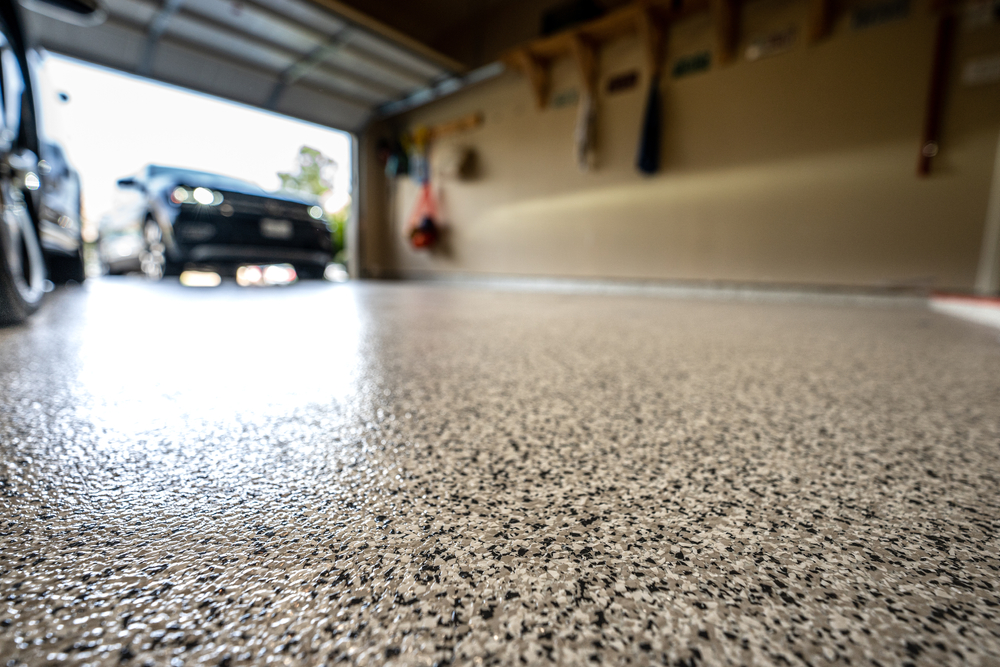
Legacy has supplied and supported thousands of DIY and contractor garage floor installations across the country, and this guide reflects what holds up and what fails on real floors.
For most residential concrete garages, the best floor coating is a system, not a single product: an epoxy base coat for build and adhesion, and a polyurea topcoat for UV stability, chemical resistance, and hot-tire resistance. At Legacy Industrial, that means two kits cover nearly every garage we see:
- Nohr-S Polyurea Full Flake Kit – for a full, edge-to-edge decorative flake floor. HD Epoxy pigmented base, flake broadcast to full coverage, then two coats of Nohr-S Polyurea clear.
- Nohr-S Polyurea Aegis Coating Kit – for a solid color floor or a light, partial flake accent. Nohr-S pigmented base with Nohr-S clear on top, and an optional ColorPrime epoxy primer.
The rest of this guide explains the chemistries, what actually matters when choosing, and how to decide between the two kits.
What Is the Best Garage Floor Coating for Concrete?
The right choice depends on how the garage is used, the condition of the concrete, sunlight exposure, climate, and how much working time the installer needs. The three chemistries worth considering are:
- Polyurea (including polyaspartic): Durable, flexible, UV-stable, and resistant to chemicals, abrasion, and hot tires. Fast cure. The best choice for the wear surface of a garage floor.
- 100% solids epoxy: High build, strong adhesion, and longer working time. The best choice for the base coat, and the only practical receiver coat for a full flake broadcast.
- Garage floor paint and water-based hardware-store kits: Low build and short service life. Fine for a storage room, wrong for a floor that sees hot tires, road salt, and dropped tools.
The strongest garage floors combine these chemistries so each layer does the job it is best at.
Polyurea vs Polyaspartic: The Same Family
Polyaspartic is a type of aliphatic polyurea. The two terms describe the same chemistry family, and treating them as competing products causes confusion.
Nohr-S Polyurea is a single-component polyaspartic polyurea. It is aliphatic, which means it is UV-stable and will not amber in sunlight. That is why it serves as the clear coat over every Legacy flake floor, why an exterior version of the Full Flake Kit exists, and why there is no need for a separate “polyaspartic” topcoat in the system.
Common Garage Floor Coating Types Compared
Epoxy Garage Floor Coatings
A 100% solids epoxy creates a thick, hard surface with excellent adhesion to prepared concrete. Its longer working time makes it forgiving for DIY application, and its build is what allows a full flake broadcast to embed properly.
Epoxy ambers under direct UV, so it belongs under a polyurea topcoat rather than exposed as the wear surface.
Legacy’s epoxy base coats:
- HD Epoxy – the pigmented base coat in the Full Flake Kit. Thick enough to hold flake to full coverage.
- SD Epoxy – the same base coat formulated to a lower VOC level for California and other VOC-regulated states. Available on its own and in the SD Epoxy Coat Kit.
- Standard Epoxy Primer-Coating – a low-VOC epoxy primer and coating. The right pick for basements and other enclosed spaces where odor and ventilation are a concern, and the primer used in Legacy’s Barnstormer kit.
Polyurea Garage Floor Coatings
Nohr-S Polyurea combines durability, flexibility, and resistance to abrasion, chemicals, road salt, and hot tires. It covers 300 square feet per gallon, applies with a roller, and can be applied from 33F to 90F, which makes it practical in unheated garages across most of the year.
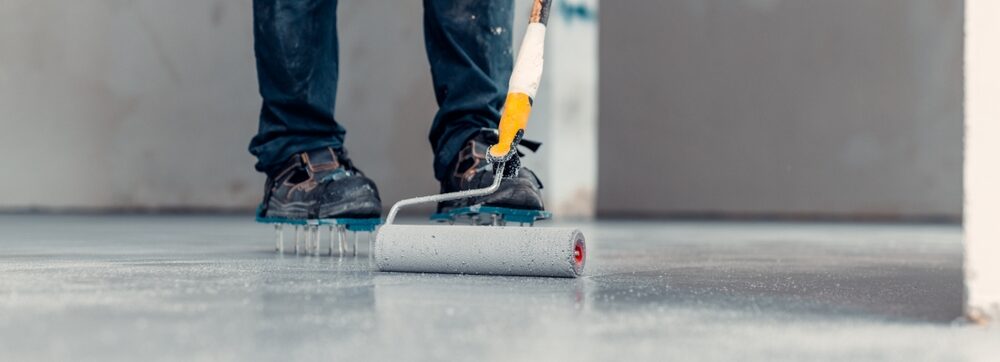
It tacks in roughly 15 to 20 minutes and does not self-level, so it is applied in one thin, even pass with a 3/8 inch nap roller. Work in sections and do not go back over areas that have started to set.
Its flexibility also lets it outperform rigid epoxy on substrates that move, such as trailer floors and slabs with seasonal temperature swings.
Garage Floor Paint and Hardware-Store Kits
Water-based garage floor paints and big-box epoxy kits are inexpensive and easy to apply, but they go on thin and wear through quickly under hot tires and vehicle traffic. They also fall outside any professional system warranty, and coating over them later requires grinding them off. For a garage that sees daily parking, start with a full system.
Key Factors to Consider When Choosing a Garage Floor Coating
Durability and Wear Resistance
Daily parking, workshop use, and heavy storage call for system thickness, not just a tough top layer. A full flake floor is the most durable configuration: the base coat is completely shielded by flake, and two clear coats lock the texture in. A solid color or partial flake floor is still a durable, long-lasting system, with a thinner overall build.
Vehicle and Hot-Tire Resistance
Hot-tire pickup happens when heat from a tire softens a coating and pulls it off the concrete where the car parks. Polyurea chemistry resists heat and tire plasticizers better than epoxy, which is one of the main reasons a polyurea wear surface belongs on top of the system. Proper surface preparation matters just as much: a coating that is mechanically bonded to ground concrete does not lift.
Chemical and Stain Resistance
Garages see motor oil, gasoline, brake fluid, cleaners, and, in northern states, large amounts of tracked-in road salt and deicer. Nohr-S Polyurea resists all of them and cleans with a mop. Wipe up fuel and solvent spills promptly.
UV and Sunlight Exposure
Sunlight through an open garage door ambers epoxy permanently. Cleaning will not remove it, and a clear coat applied afterward only prevents further yellowing. Keep epoxy under a UV-stable polyurea topcoat from the start, and the floor holds its color.
Application and Cure Time
Polyurea cures fast, which shortens downtime but shortens working time. Epoxy gives more time to spread and broadcast flake. A complete system uses each where it fits: the epoxy base coat is where flake is broadcast and where the installer needs time, and the polyurea clear goes on quickly and returns the floor to foot traffic the next day. Follow the technical data sheet for the specific product for recoat windows and return-to-service times.
Temperature and Climate
Cold concrete slows epoxy cure and can cause moisture to condense on the slab. The slab surface must be at least 5F above the dew point during application. Hot conditions shorten working time, so apply in the cooler part of the day in summer. Check the temperature range on each product’s technical data sheet before scheduling, especially for unheated garages.
Concrete Surface Condition and Preparation
Preparation determines whether a coating lasts. The standard is diamond grinding to a CSP 2-3 profile. Acid etching is a fallback only on open, absorbent concrete that has never been sealed or power-troweled. Pressure washing is cleaning, not preparation. A quick self-check: sprinkle water on the slab. If it beads instead of soaking in, the surface is too closed to etch and must be ground.
Repair after grinding, before coating:
- Spalls, pits, and voids: FiveTon Epoxy Patch. Butt the edges, never feather.
- Saw-cut control joints: XtremeSet-100 Crack & Joint Filler, mixed with sand and poured to flush, then coated over. XtremeSet-100 is for control joints, not for spall repair and not for expansion or isolation joints.
- Control joints in general: Honor them. A rigidly filled joint that is coated over will crack through the coating as the slab moves. Leaving control joints open is the lower-risk choice on a newer slab.
Moisture
Every slab on grade should be tested for moisture before coating. The simple version: tape a 2-foot by 2-foot square of plastic sheeting to the floor on all four edges and leave it 24 to 48 hours. Condensation under the plastic or a darkened slab means moisture is moving through the concrete. In that case, AquaDike MVB moisture vapor barrier primer goes down first, at 17 mils, before any other coat.
Cost and Long-Term Value
Upfront price tells only part of the story. Factor in preparation, repair materials, expected service life, and future maintenance coats. A properly installed polyurea system can be renewed years later with a single clear maintenance coat over a deglossed surface, which costs a fraction of a replacement.
DIY vs Professional Installation
Both Legacy kits are designed for DIY installation with rented grinding equipment, and most of our customers install their own floors. Larger floors, badly damaged slabs, or floors with known moisture problems are worth pricing out with a contractor.
Why the Best Garage Floors Use a Complete Coating System
Long-lasting results depend on compatible layers working together. Both Legacy kits follow the same sequence:
- Prepare and repair. Diamond grind, vacuum, test for moisture, repair spalls, and fill control joints.
- Prime if needed. AquaDike MVB where the moisture test failed. ColorPrime epoxy primer where a three-coat Aegis system is specified.
- Base coat. HD Epoxy (Full Flake Kit) or Nohr-S pigmented polyurea (Aegis Kit).
- Broadcast. Full flake to rejection, or a partial decorative broadcast, or none for a solid color floor.
- Clear coat. Nohr-S Polyurea clear. Two coats over full flake, one over solid color or partial flake. Anti-skid additive goes in the clear coat only.
Which Kit Should You Choose?
Choose the Nohr-S Polyurea Full Flake Kit if you want:
- A full, edge-to-edge flake floor
- The most durable configuration Legacy sells
- The best hiding of stains, patches, and imperfections in the slab
- Consistent traction from the flake texture
Choose the Nohr-S Polyurea Aegis Coating Kit if you want:
- A solid color floor, or a light partial flake accent
- A cleaner, more uniform look
- A thinner system that still delivers polyurea durability, UV stability, and chemical resistance
Sizing: always size up to the next kit tier. Freshly ground concrete absorbs more material on the first coat than the nominal coverage rate suggests. A 650 square foot garage takes the 900 square foot kit.
California and VOC-regulated states: order the SD Epoxy Coat Kit or ask us to substitute SD Epoxy for HD Epoxy in the Full Flake Kit.
Need help sizing a kit or choosing a flake blend? Contact Legacy Industrial at 888-652-0333 or admin@legacyindustrial.co for a project-specific recommendation.
Frequently Asked Questions About Garage Floor Coatings
What is the longest-lasting garage floor coating?
A full flake system with an epoxy base and two polyurea clear coats over diamond-ground concrete. The flake shields the base coat completely, and the polyurea clear takes the wear.
Is polyurea better than epoxy for a garage floor?
As the wear surface, yes. Polyurea is UV-stable, flexible, and more resistant to hot tires and chemicals. Epoxy is the better base coat because of its build and working time. The best floors use both.
Is polyaspartic better than epoxy for garage floors?
Polyaspartic is a type of polyurea, so the answer is the same. Use it on top, over an epoxy base.
Can you coat an old or cracked concrete garage floor?
Yes. Grind the surface, repair spalls with FiveTon Epoxy Patch, fill saw-cut control joints with XtremeSet-100 or leave them open, and run a moisture test. Existing coatings and sealers must be ground off completely before the new system goes down.
How long does a garage floor coating last?
A properly installed Legacy system over prepared concrete lasts many years under daily residential use. Service life depends on preparation quality, traffic, and whether a maintenance clear coat is applied when the finish begins to dull. Hardware-store kits typically fail within a few seasons under the same conditions.
What is the difference between HD Epoxy and SD Epoxy?
They are the same 100% solids epoxy base coat. SD Epoxy is formulated to a lower VOC level to comply with California and other VOC-regulated states. Choose SD Epoxy if you are shipping to one of those states.